 Morphemed
Read words you've never seen.
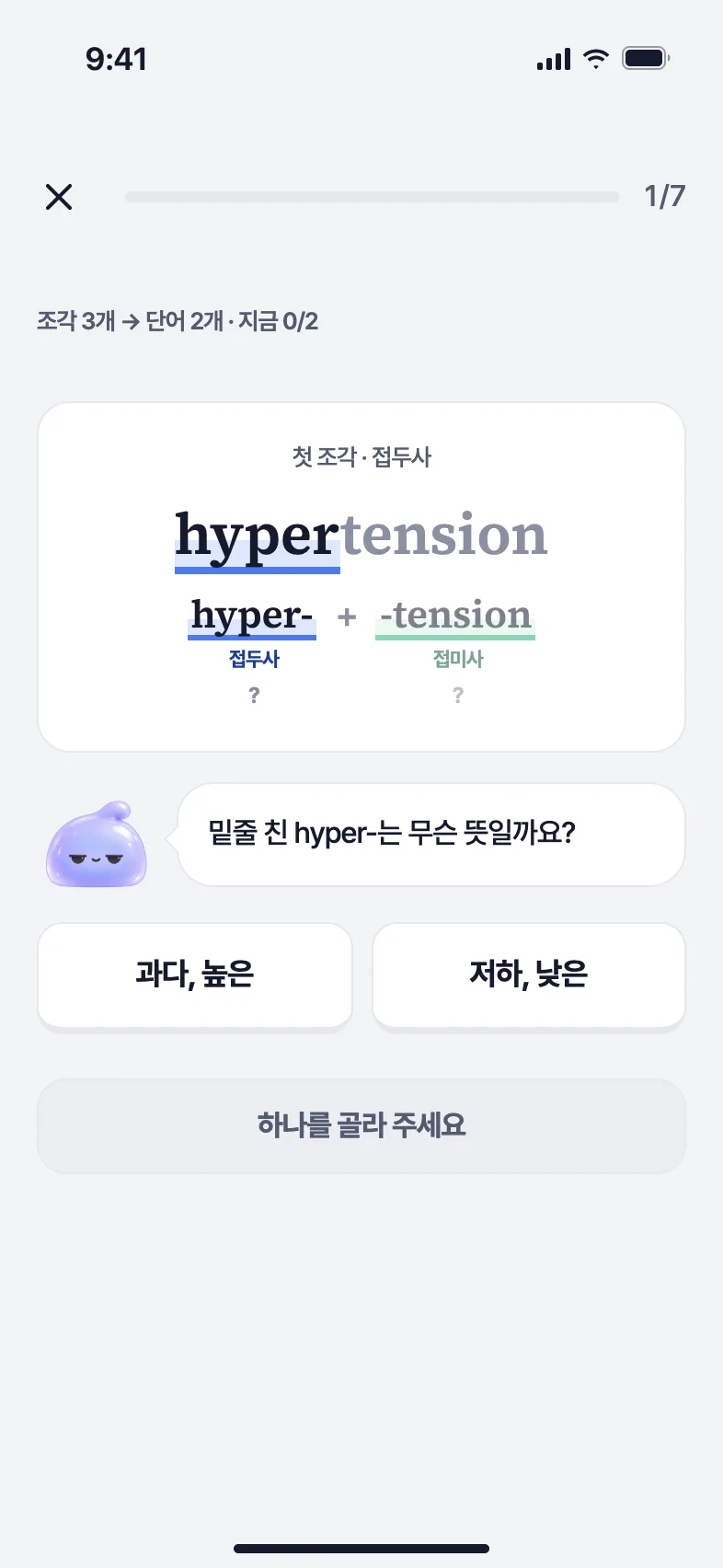
Mopi breaks a long word at each meaningful part. Know hyper- (high), and hypertension and hyperglycemia open up at once.
For nursing, physiotherapy and health-science students
No more memorising whole word lists overnight.
Even a new word like hyperglycemia reads easily once you split it.English medical terms · Korean explanations
An example split by meaning. Not every term splits the same way.
Understand before memorising
Medical terms often share word parts. Learning their meanings gives you clues when you meet an unfamiliar term.
Less cramming. More fun.
Mopi breaks a long word at each meaningful part. Know hyper- (high), and hypertension and hyperglycemia open up at once.
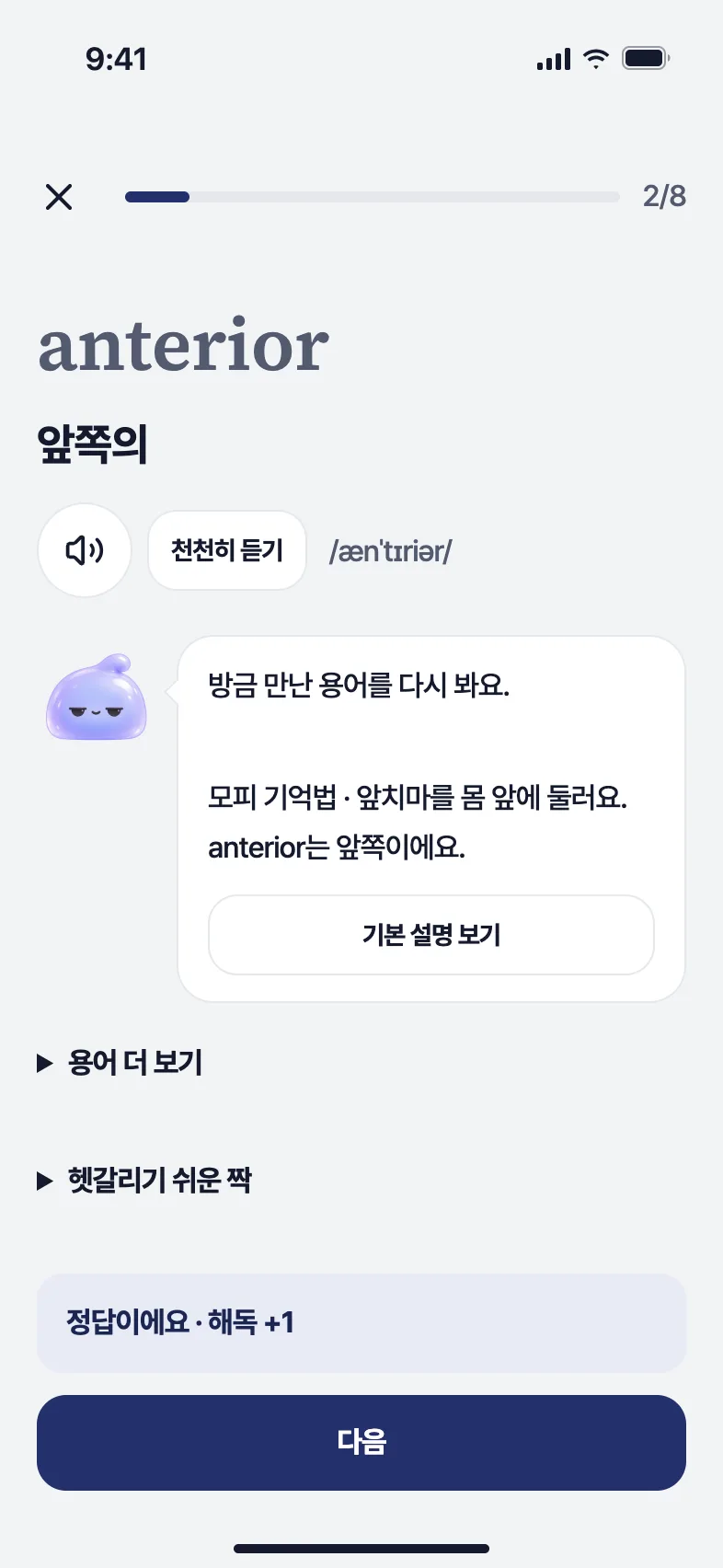
For words you keep mixing up, Mopi adds a short memory hook. See the word again, and the hook comes first, bringing the meaning with it.
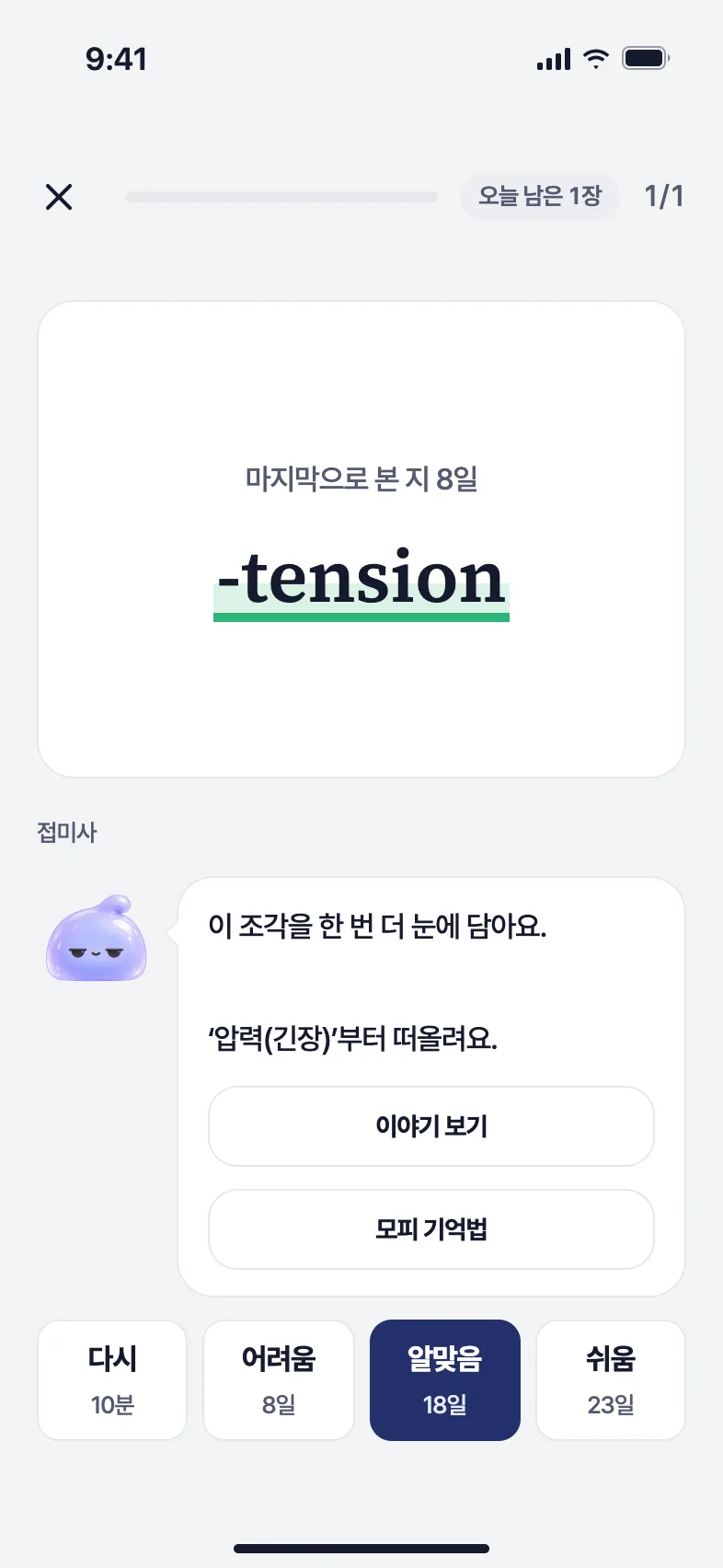
Words you know well are skipped, and Mopi brings back only the ones starting to blur. Rate how well you remembered, and your next review date is set for you.
One topic, one first lesson
Body, Disease, Hospital and Abbreviations. Choose what you need and study one stage at a time.
Published learning is currently free. First stages and review of learned cards will remain free when paid subscriptions launch.
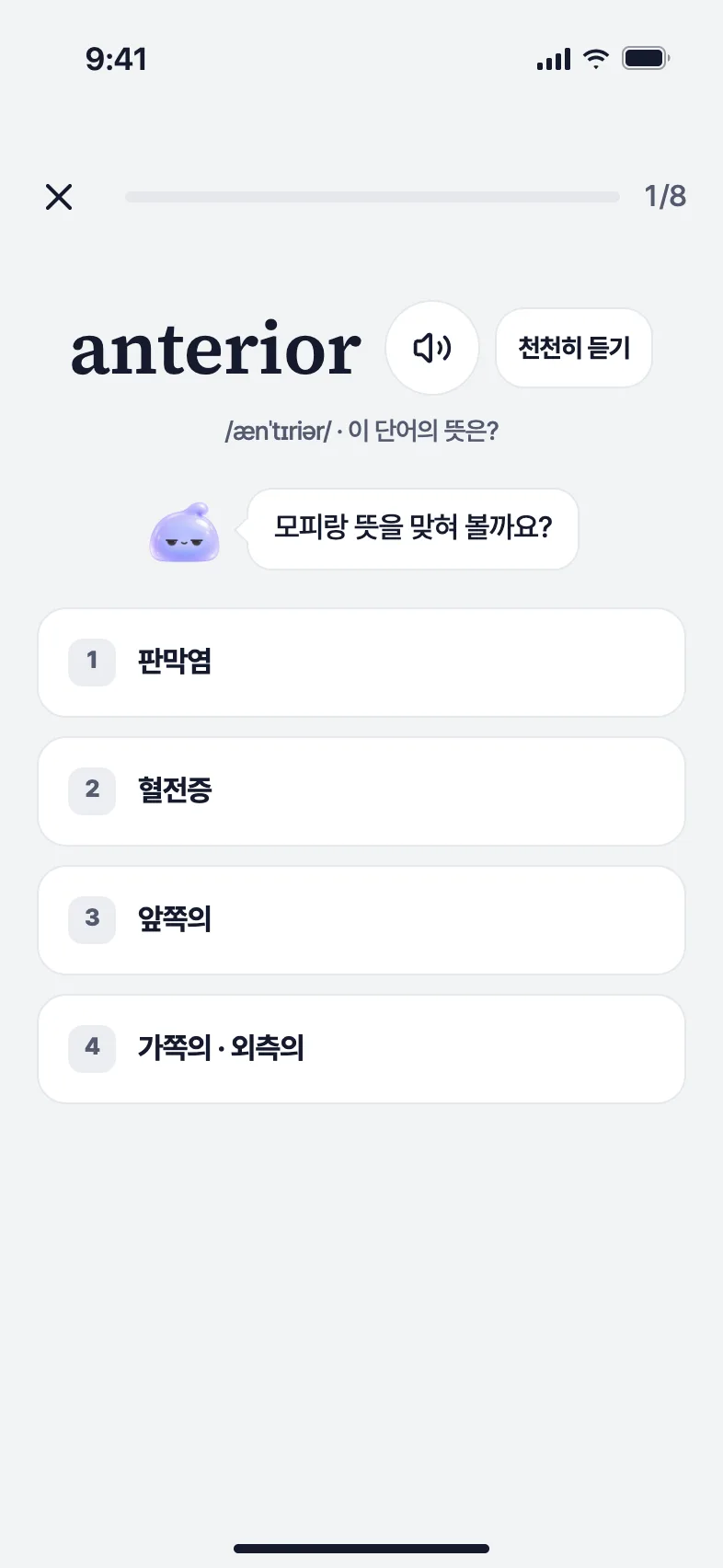
Yes. It's built for complete beginners. Medical terms aren't random words to memorise but combinations of prefixes, roots and suffixes, so once you know a part's meaning, even new words become readable. Know card (heart), and cardiology and tachycardia are half solved. Body stage 1 starts with four easy direction terms such as front, back, medial and lateral, and words you mix up come back for review just as you're about to forget them.
Each stage is just four words, so it takes a few minutes. Finishing either one new lesson or one review round counts as done for the day. A little every day helps you remember longer.
English medical terms that come up often in nursing and health-science classes and placements, across four topics: Body, Disease, Hospital and Abbreviations. It includes about 2,700 terms, 114 word parts and 54 abbreviations, and abbreviations that are easy to misread come with a caution note.
Published learning is currently free. First stages and review of learned cards will remain free when paid subscriptions launch.
You can try the first stage without signing up. Sign up and your progress and review schedule are saved to your account, so you can pick up where you left off on your phone or computer.
Mopi’s name comes from morpheme, the smallest piece of language that carries meaning.
Mopi used to be a squishy jelly living on the last page of a thick medical dictionary. Every night, long words like hyperglycemia rolled out of the pages and scared students the night before exams, and Mopi could only watch. Then one night, while trying to push hyperglycemia back into the book, Mopi’s soft body got pressed against the word and split apart. The word broke along the very same lines into hyper-, glyc and -emia, and suddenly its meaning showed: high · blood sugar · blood condition.
Since then, whenever Mopi sees a long word, it squeezes itself in on purpose. The word snaps apart at each meaningful piece, and once the meaning is read, Mopi becomes one lump again. The little tip on its head leans to one side from following words as it reads. And its half-closed eyes? Yes, it’s sleepy. During exam season, Mopi stays up all night wedged between words too.
